- Blog
How Do Ants Get Into Houses? 5 Common Entry Points (and How to Stop Them)
If you’ve suddenly started seeing ants inside your home, the first question most people ask is: how do ants get into houses in the first place?
The answer is usually much simpler than people expect. Ants don’t break in randomly, they follow very specific routes. A single scout ant will search for food and, once it finds a way indoors, it leaves behind a pheromone trail that guides the rest of the colony along the same path.
Before long, what started as one or two ants can turn into a steady stream moving through the exact same gap or crack.
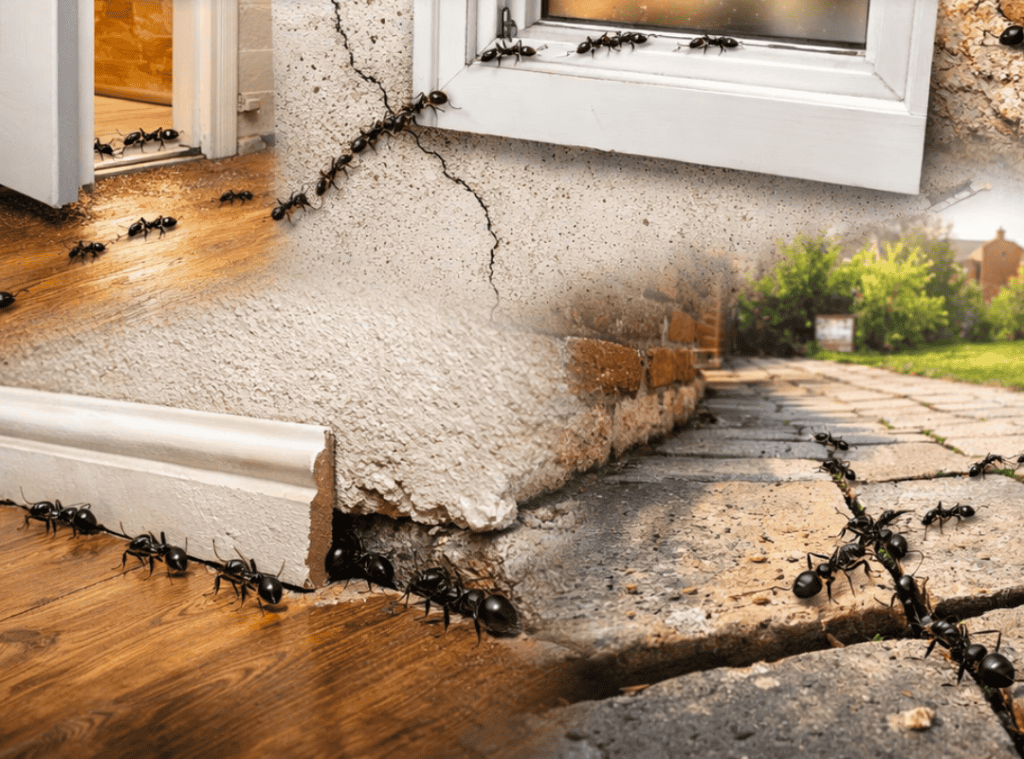
The key to stopping the problem is finding the entry point. Ants often enter through tiny gaps around doors, windows, skirting boards, patios, and other small openings around the home.
Below are five of the most common ant entry points, and how you can stop ants using this knowledge.
1. Door Thresholds
Doorways are one of the most common ways ants get into houses. Even when a door looks tightly sealed, small gaps under the threshold or around the frame can easily allow ants to squeeze through.
This is particularly common with back doors, patio doors, and kitchen entrances that open directly onto paving or garden paths. Ant nests are often built under patios or along the edges of paving slabs, which means a doorway can become a direct route between the nest and the food inside your home.
If you start noticing ants indoors, check around the base of the door for small trails moving from outside to inside. Once a scout ant finds food indoors, it leaves a pheromone trail that the rest of the colony will follow, turning a small gap into a busy ant highway.
One way to stop ants using the route is to break that trail and create a barrier across the entry point. A thin band of Dethlac Ant Killer Lacquer sprayed along the threshold dries to form an invisible barrier that continues working for months, quickly killing ants after they cross the treated surface.
2. Window Frames
Windows are another common ant entry point that many people overlook. Small gaps around window frames, worn sealant, or tiny cracks in the surrounding brickwork can provide enough space for ants to get inside.
Ants are excellent climbers, so they don’t just stay at ground level. It’s very common for them to travel up exterior walls or along brickwork before entering through small openings around a window frame.
This is why people often first notice ants on a kitchen windowsill or around a window ledge, even when the nest is actually somewhere outside in the garden or under nearby paving.
The most common species responsible for this in UK homes is the black garden ant (Lasius niger), which frequently nests in soil, lawns, or beneath paving slabs before foraging indoors for sugary foods.
To stop ants using these routes, treating the outside edge of the window frame can be very effective. A discreet, invisible application of Dethlac creates a protective barrier that breaks the pheromone trail, helping prevent ants from ever reaching the windowsill.
3. Skirting Boards and Floor Gaps
Many homeowners are surprised to see ants appearing along skirting boards or floor gaps. While it looks like they’ve come from inside the walls, they’re often following a trail from outdoors, sneaking in through small gaps at the base of the home.
Ants will travel along edges and floor cavities, using even the tiniest cracks to move from soil or wall cavities toward kitchens, living rooms, and other areas with accessible food.
For extra protection, Dethlac can be applied both along skirting boards and around the outside of the home. This dual approach breaks the ant trail before they reach the interior and quickly eliminates ants attempting to cross the treated areas, helping prevent new trails from forming.
4. Cracks in Exterior Walls and Air Bricks
Tiny cracks in walls or gaps around air bricks might seem insignificant, but they can provide a convenient route for ants to sneak indoors. These hidden openings let them bypass obvious barriers like doors or windows, often leading to ants appearing in rooms where you least expect them.
Ants naturally follow these paths, moving between outdoor nests and indoor food sources. While you don’t want to block air bricks that are important for ventilation, a targeted treatment with Dethlac along the edges can stop ants using these routes. This creates a protective zone that interrupts their trail without affecting airflow, keeping your home ant-free.
5. Patios and Paving
Patios, paving slabs, and garden paths might seem harmless, but they’re often the first stop for ants before they even reach your home. Many colonies nest under paving or in soil along garden edges, sending out scouts that follow natural trails straight to doors, windows, or other small gaps.
Because ants travel along these established routes, the problem can start outside long before you see a single ant indoors. This makes patios and paving a critical area for prevention, and treating these areas can stop ants before they even reach entry points.
Applying Dethlac along the edges of paths or at the base of patio slabs can disrupt trails leading to the house, providing a double layer of protection when combined with interior barriers at doors, windows, and skirting boards. This approach tackles the problem at its source and keeps ants from forming new indoor trails.
Understanding where ants are coming from is the first step in keeping your home ant-free. From doors and windows to skirting boards, wall cracks, and even patios, these common entry points make it easy for ants to reach your food and living spaces.
Taking simple, targeted measures can make a big difference. Alongside keeping food sealed and surfaces clean, applying protective treatments at key entry points interrupts trails and prevents ants from forming new indoor paths.
Quick Prevention Checklist:
-
Check and treat door thresholds for gaps.
-
Inspect window frames for cracks and sealant gaps.
-
Monitor skirting boards and floor edges where ants appear.
-
Look for tiny cracks in exterior walls or around air bricks.
-
Keep patios and paving edges clear and apply protective treatment where needed.
By addressing these hotspots, you can effectively stop ants entering your home and enjoy a pest-free environment all year round.