- Blog
How to Stop Ants in Rented Accommodation (Without Damaging Walls or Surfaces)
Ants are one of the most common pest problems in rented accommodation across the UK. Whether it’s a rented flat, apartment, student housing, or shared HMO, ant infestations can quickly become frustrating, especially when they keep coming back even after cleaning or spraying.
The challenge for tenants is that you usually can’t carry out structural repairs, seal walls, or permanently alter the property. That means you need a solution that is effective, surface-based, and safe to use in a rented home.
This guide explains why ants keep appearing in rented flats and the most effective ways to stop them without damaging walls, paintwork, or surfaces.
Why ants are such a common problem in rented flats
Ant infestations in rental properties are often caused by a combination of structural and behavioural factors:
1. Easy entry points
Flats and apartments often have small gaps around:
- skirting boards
- window frames
- pipework and utility entry points
- door thresholds
Ants only need a tiny gap to enter a property.
2. Shared building structure
In apartment blocks or HMOs, ants can travel between units through:
- cavity walls
- shared flooring voids
- communal pipe systems
This means even if one flat is clean, ants may still appear.
3. Food sources in kitchens
Ants are strongly attracted to:
- sugar and sweet foods
- crumbs and spills
- bins and recycling areas
- pet food bowls
Once they find a food source, they establish pheromone trails that guide other ants back repeatedly.
4. Recurring infestations
In rented homes, ants often return because:
- nests are outside or inside walls
- temporary sprays don’t remove the colony
- entry routes remain open
This is why quick fixes often fail.
Why ants keep coming back
Ants don’t behave randomly. They follow invisible chemical trails (pheromones). Once a trail is established into a kitchen or food area, thousands of ants can follow the same route daily.
This is why simply killing visible ants rarely solves the problem, you also need to disrupt their travel routes.
How to stop ants in a rented flat (without damaging surfaces)
Because you can’t make structural changes in a rental property, the most effective approach is a combination of prevention, cleaning, and surface-based treatment.
Step 1: Remove food sources
Start by eliminating what attracts ants:
- wipe kitchen surfaces daily
- store food in sealed containers
- clean crumbs from floors and worktops
- empty bins regularly
This reduces attraction pressure.
Step 2: Block entry points (non-invasive methods)
You can reduce access without damaging the property:
- use removable seal strips for doors/windows
- keep sinks and plugholes clean
- reduce moisture around kitchens and bathrooms
Even small changes can reduce activity.
Step 3: Break ant trails with a long-lasting surface treatment
This is where a targeted product can make a big difference.
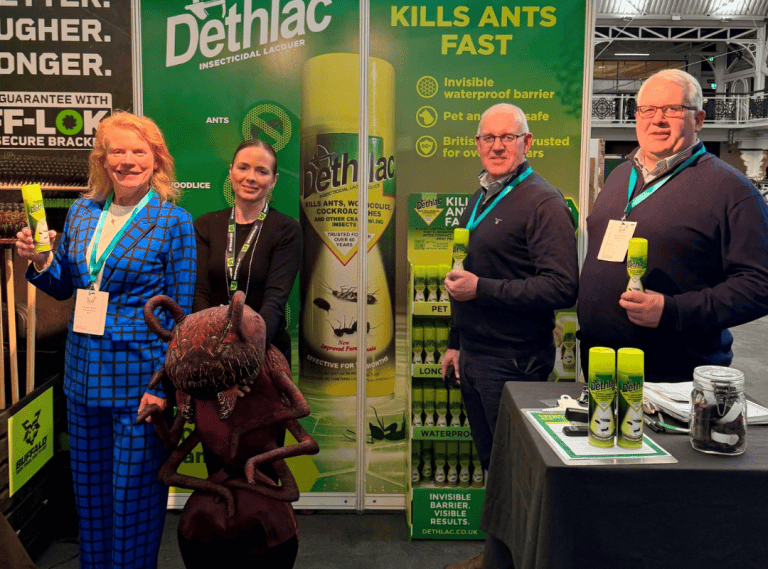
Dethlac Insecticide Lacquer Spray is a surface-applied insecticide that dries into a clear, durable lacquer film. Instead of only killing ants on contact, it creates a treated barrier along common entry routes such as skirting boards, kitchen edges, and window frames.
When ants walk across treated areas, the barrier helps disrupt their movement patterns and reduces repeated trail formation.
This makes it especially useful in rented accommodation because:
- it works on existing surfaces
- it doesn’t require drilling, sealing, or structural changes
- it targets the paths ants repeatedly use
Step 4: Focus on high-risk areas
In most rented flats, ants are commonly found in:
- kitchen skirting boards
- under appliances (fridge, oven)
- around sinks and pipe entry points
- window ledges and door frames
Treating these areas creates a protective perimeter inside the flat.
Step 5: Maintain protection during peak ant season
Ant activity in the UK often increases in warmer months (spring and summer). During this time:
- reapply surface treatments as needed
- continue cleaning and monitoring entry points
- keep food storage tight and controlled
Consistency is key to preventing recurrence.
What NOT to rely on alone
Many tenants try quick fixes that don’t fully solve the issue:
- single-use ant sprays (temporary effect)
- surface wiping only (doesn’t remove trails fully)
- ignoring entry points (ants return quickly)
These may reduce visible ants but rarely stop the infestation cycle.
When to escalate the problem
If ants persist despite treatment, it may indicate:
- a nest inside walls or floors
- a building-wide infestation
- external nesting near the property
In these cases, combining surface treatment with baiting systems or professional pest control may be necessary.
Stopping ants in a rented flat is less about heavy chemical use and more about consistent, targeted control. Because tenants can’t alter the structure of the property, the most effective approach is to remove food sources, reduce entry opportunities, and use surface-based treatments that don’t damage walls or surfaces.
With the right approach, and tools like Dethlac used strategically, it’s possible to control ant infestations effectively in rented accommodation and reduce the chances of them returning.